Customer Concept Approval Record: Approved, Open, and Out of Scope
A customer concept approval record should make three boundaries visible:
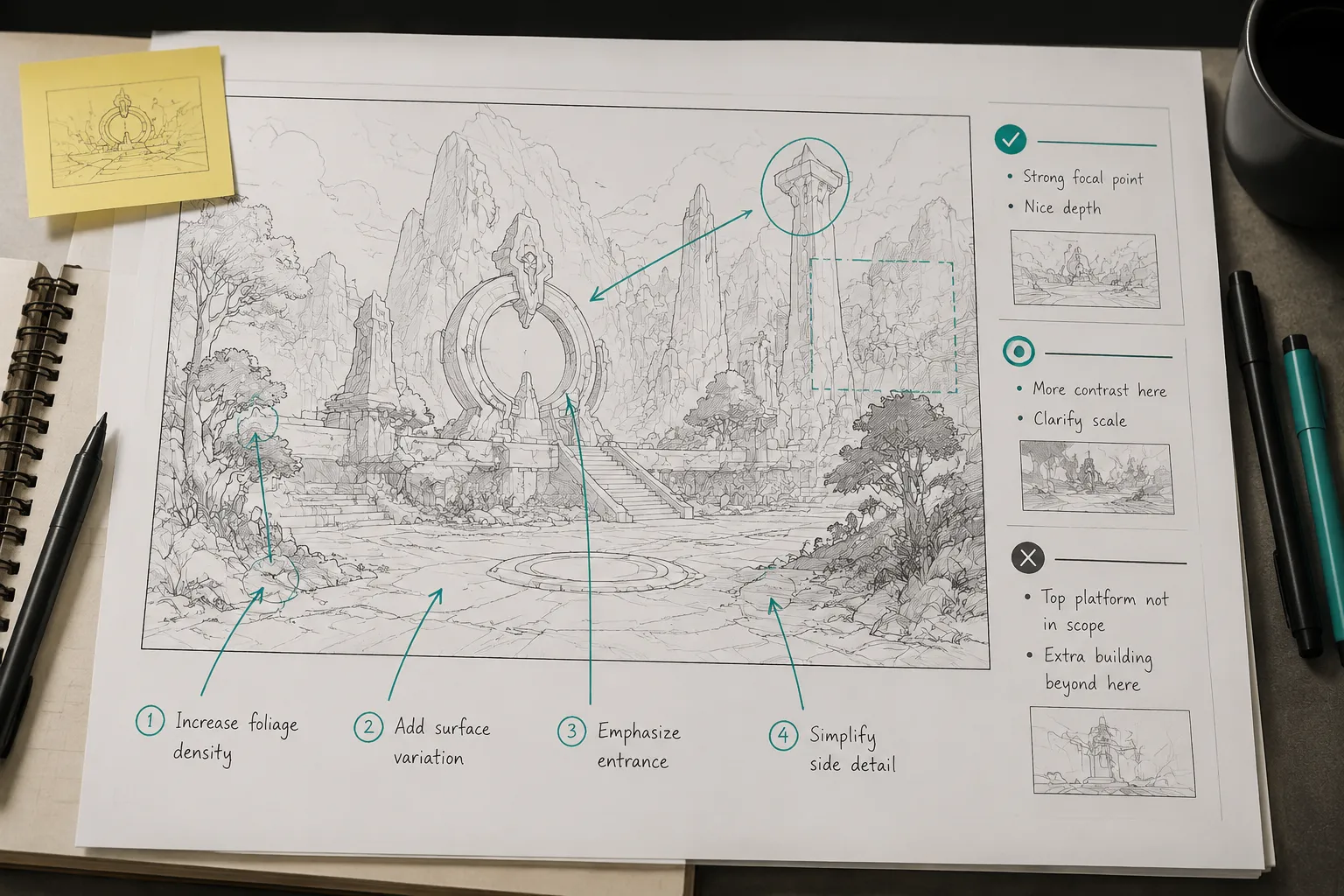
- What the customer approved
- What still needs an answer or check
- What the current design handoff excludes
This is a record of visible concept decisions. It does not certify production performance, material suitability, machine readiness, test-piece results, copyright ownership, or reuse permission.
A useful design approval checklist connects each decision to a revision, owner, evidence status, and next action. That structure keeps an attractive concept preview from being mistaken for an approved production file.
What Customer Concept Approval Decides
Customer approval should apply to observable artwork choices. The record can identify the selected concept direction, wording, layout, major contours, visible layers, and other choices shown in the reviewed preview.
| Record field | Example entry |
|---|---|
| Selected direction | Single-color line-art badge, revision B |
| Approved wording | “North Ridge Workshop” |
| Approved layout | Text follows the upper contour |
| Approved visual elements | Mountain outline, border, and central mark |
| Reference revision | Concept preview, revision 03 |
| Decision evidence | Written approval attached to the stated revision |
The wording should stay narrow. “Approved concept direction” is different from “approved for production.” “Approved layout” is different from “approved final artwork.” These distinctions record what was reviewed without extending the decision into later shop work.
The preview shows a visible arrangement at a particular revision. It does not show whether every contour has usable paths, whether small counters will remain open, or how the design will behave on a selected material.
The Three States in the Record
Keep approved, open, and out of scope as separate states. Combining them in one comment makes later handoff decisions harder to inspect.
Approved
An approved item is visible, identified, and accepted for the stated concept revision.
- Selected design direction
- Wording and spelling
- Relative placement of text and image
- Border treatment
- Visible layer count
- Single-color or stated color presentation
- Reference preview used for the decision
Include a revision identifier. Without one, a later change can appear to have been approved when the customer reviewed an earlier version.
Open
An open item needs a decision, source check, production check, or assigned action. Typical unresolved design checks include:
- Final scale and intended display size
- Minimum gaps between contours
- Small counters and enclosed spaces
- Stroke simplification and layer separation
- Path preparation and next file format
- Exact material and equipment context
- Test-piece confirmation
- Source rights, attribution, and commercial-use conditions
An open item is not a failure in the concept. It marks work that has not been decided or verified.
Give each open item an owner and a next action. “Check material” is incomplete. “Shop operator to confirm the exact substrate and machine context before path preparation” makes responsibility visible without supplying machine settings.
Out of Scope
An out-of-scope item is explicitly excluded from the current design approval or handoff.
- Machine setup, feeds, speeds, power, or tooling
- Ventilation planning
- Material suitability confirmation
- Production quantity, packaging, or installation
- Final finishing
- Independent rights clearance or commercial-use permission
- Test-piece results
- Customer-specific manufacturing tolerances
- Revisions requested after the stated approval revision
An exclusion prevents silence from being interpreted as inclusion. It also routes the question to the appropriate owner instead of leaving it attached to the design reviewer.
A Compact Shop Handoff Approval Record
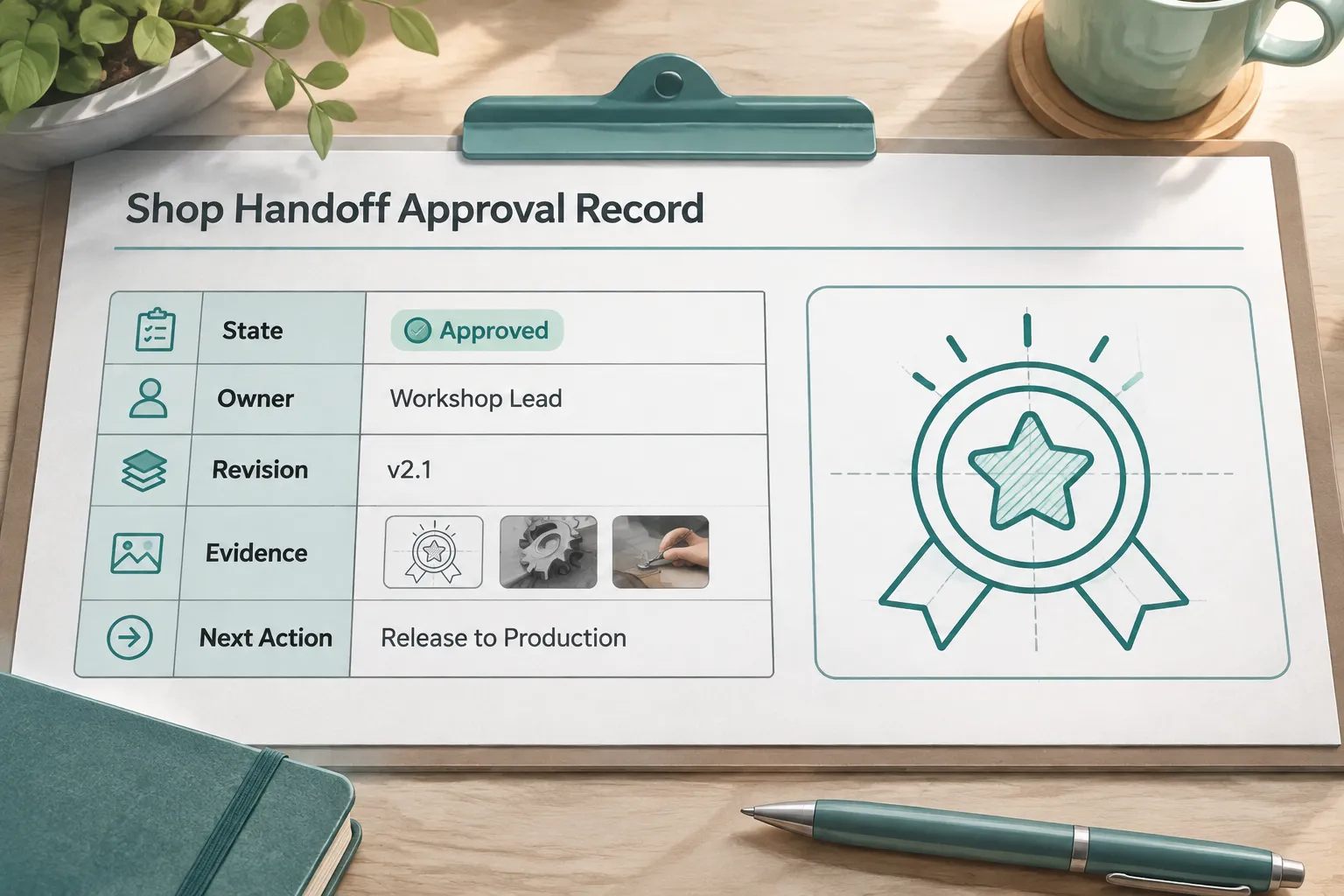
| Item | State | Owner | Revision or date | Evidence status | Next action |
|---|---|---|---|---|---|
| Selected concept direction | Approved | Customer contact | Revision 03 | Written approval recorded | Route to design cleanup |
| Wording and spelling | Approved | Customer contact | Revision 03 | Text visible in preview | Preserve in handoff |
| Small interior gaps | Open | Designer or shop reviewer | Revision 03 | Preview only | Inspect at intended scale |
| Exact substrate | Open | Shop operator | Undated | No material test record | Confirm material and equipment context |
| Source license terms | Open | Rights owner or customer | Undated | Source documentation incomplete | Record license and conditions |
| Machine setup | Out of scope | Shop operator | Undated | Excluded from concept review | Handle under shop workflow |
This format separates a customer’s visual decision from production-dependent questions. It also shows why each line in the approved preview should not be treated as production evidence.
Use Precise Approval Wording
Approval language should name the object of approval and the revision involved.
- “The customer approved the selected concept direction shown in revision 03.”
- “The customer approved the wording and its placement in the reviewed layout.”
- “The customer approved the visible border and central mark for continued cleanup.”
- “The customer approved the single-color presentation as the design direction.”
Avoid broad wording that combines visual approval with later technical or rights decisions:
- “The customer approved the final file.”
- “The design is ready for every machine.”
- “The artwork is cleared for commercial use.”
- “The preview confirms the finished result.”
A selected design direction can be approved while production checks remain open. That distinction is the central boundary in a reliable handoff.
Separate Decision Ownership From Rights Permission
Ownership has two different meanings in this record. Decision ownership identifies who can approve the visible concept, wording, layout, and revision. Rights responsibility identifies who can confirm permission to use a supplied image, logo, font, reference, or other source material.
Customer sign-off records a design decision. It does not automatically transfer copyright, establish authorship, or grant permission to reuse third-party material. General copyright guidance supports keeping approval, ownership, permission, and use as separate questions.
Licensing terms can include attribution, commercial-use limits, or adaptation conditions. Record the source, license type, required credit, date checked, and unresolved rights owner instead of marking the source simply “approved.” A specific source still requires confirmation under its stated terms.
“Source identified. License terms and commercial-use condition remain open pending confirmation by the rights owner.”
Approval Is Not Production Readiness
Concept approval asks whether the customer accepts the direction, wording, visible layout, major contours, and revision to continue. Production readiness asks additional questions about paths, scale, gaps, material, equipment, testing, setup, finishing, and inspection responsibilities.
Material and equipment checks depend on the exact substrate and machine context. Manufacturer documentation can help identify the questions to ask, but it does not establish universal settings, output quality, or readiness for every shop.
A material-context mockup can help compare appearance. It cannot replace a shop-specific material review or test-piece record. A successful test remains tied to its machine, material, preparation, and process.
Write Open Questions as Actions
Open questions become useful when they identify an owner, evidence, and a next step.
Weak: “Check whether this will work.”
Stronger: “Shop reviewer to inspect the smallest counters at the intended display scale and record whether simplification is needed.”
Weak: “Confirm rights.”
Stronger: “Rights owner to record the source terms, attribution requirement, commercial-use condition, and permission status.”
Use evidence labels that match what is actually available:
- Visible in concept preview
- Written customer approval
- Source documentation recorded
- Shop-dependent check pending
- No test-piece record
- Excluded from current handoff
Design-review literature commonly emphasizes conclusions, unresolved actions, responsible owners, and corrective steps. That principle is useful here as a record structure; it does not turn this customer record into a formal engineering review.
Worked Example
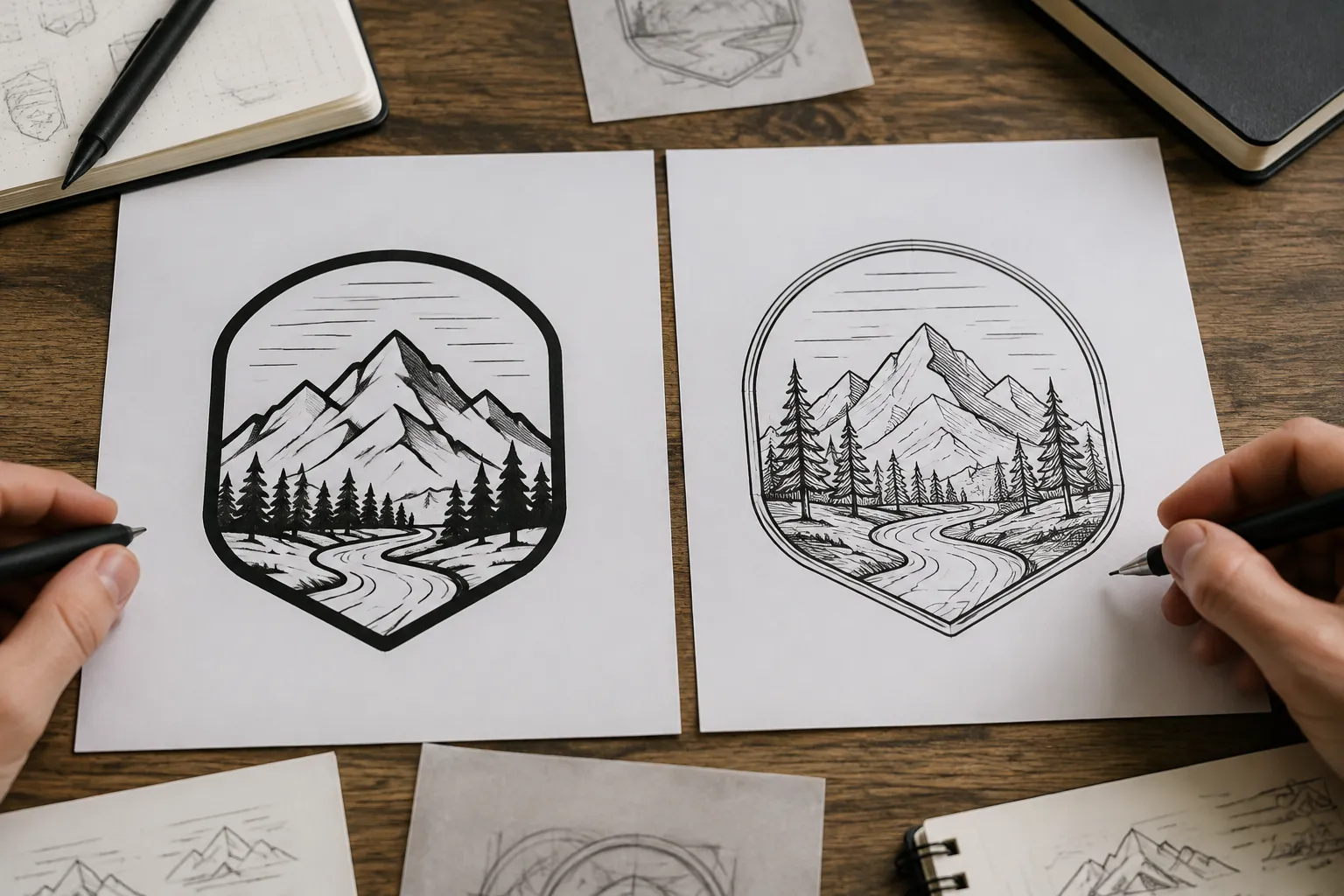
Suppose a customer reviews two line-art badge concepts. Concept A uses a heavier outer contour and fewer internal details. Concept B has finer interior strokes and a more detailed center mark.
The customer approves Concept B as the visual direction and approves the wording shown in revision 04. The record should retain the choice while leaving production-dependent questions visible:
- Approved: Concept B direction
- Approved: Wording and general layout in revision 04
- Open: Small internal gaps require inspection at intended scale
- Open: Final material and equipment context
- Open: Source rights and attribution conditions
- Out of scope: Machine setup and test-piece results
- Next action: Prepare a path view and route production questions to the shop operator
The two concepts can then be compared by consequence. The heavier contour may offer a clearer visual structure at small scale, while the finer version may preserve more detail but require closer inspection. Neither preview settles the material or process outcome.
When the Record Is Ready for the Next Design Step
The record is ready to move into cleanup when the approved revision and selected direction are identifiable, approved wording and layout are recorded, and every open question has an owner and next action.
Rights questions should remain separate from customer preference. Material and equipment checks should remain separate from concept approval. Exclusions should be stated plainly, and the preview should be distinguished from a path view, test piece, and production file.
This does not require every open item to be resolved. It requires unresolved work to be visible and routed correctly.
Final Check
Compare the record with the exact preview the customer approved. Confirm that the revision, wording, selected direction, open questions, owners, and exclusions all refer to the same artifact.
Then route the next owned action: prepare the cleanup copy, request the rights record, or ask the shop to confirm the material-specific check.