Concept Approval and Decision Ownership

A useful design approval records more than “looks good.” It identifies the exact concept preview, names the visible choices accepted, preserves unresolved questions, and assigns each later confirmation to a responsible owner.
For line art, the record should separate three states: approved, open, and out of scope. This boundary matters because customer concept approval does not establish source permission, material suitability, machine readiness, process safety, or acceptance of a produced sample.
More specific pages
These pages continue the topic in smaller, more specific directions.
What design approval actually decides
Concept approval selects a visual direction from the material presented. It can settle composition, subject treatment, relative scale, line character, and other features clearly visible in the preview.
Typical approved choices include:
- The selected monogram arrangement
- A circular badge instead of an open composition
- The position of a name beneath an illustration
- A single-color treatment rather than separate color layers
- Simplified interior details
- The balance between filled and open areas
- The intended orientation and overall proportions
- One border style from several visible alternatives
The record should connect the chosen feature to the stated preference. “Concept B approved” is less useful than “Concept B approved for its open border, centered initials, and reduced leaf detail.” The second entry helps a later reviewer distinguish intentional features from omissions.
A concept preview can show intended appearance without revealing final path structure, minimum gaps, material response, or equipment behavior. Those dependencies remain separate decisions.
Record approved, open, and out-of-scope decisions
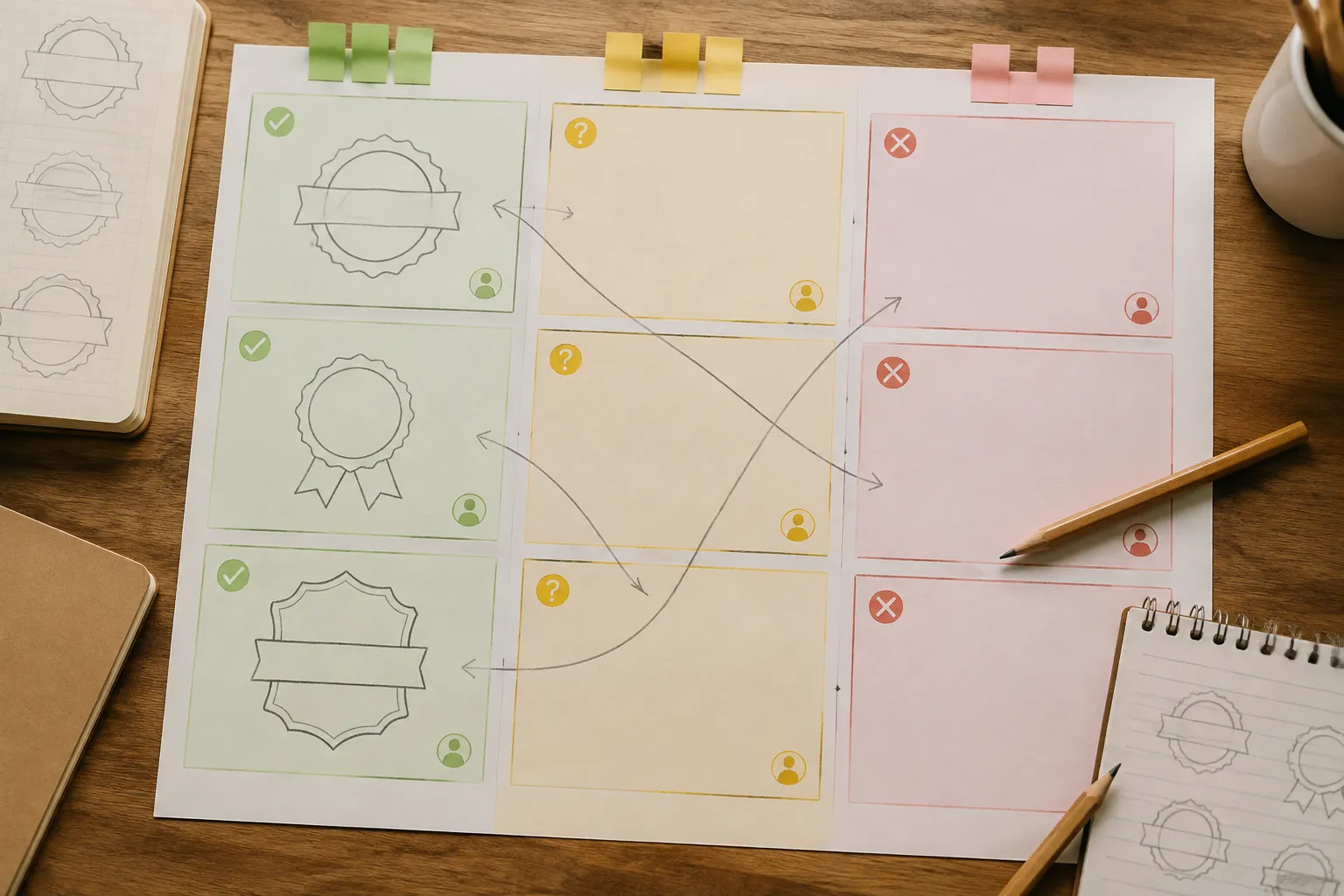
A Customer Concept Approval Record can remain short. It needs enough detail to identify the reviewed object, define the outcome, and route unfinished decisions without becoming a production specification.
| Record field | What to capture |
|---|---|
| Project identifier | The order, product, or asset name used by both parties |
| Concept identifier | A distinct concept name or number |
| Revision | The exact preview revision reviewed |
| Review material | The named concept preview, comparison sheet, or mockup |
| Approved | Visible choices accepted in this review |
| Open | Unresolved decisions and the information needed next |
| Out of scope | Matters not decided by this approval |
| Decision owner | The person or role responsible for each remaining confirmation |
| Outcome | Approved, approved with stated conditions, deferred, or revision requested |
| Change route | What happens if an accepted feature is reconsidered |
An affirmative outcome is clearer than assumed approval. The concept identifier and revision also prevent confusion between similar files. “Approved the round badge” becomes ambiguous when three round-badge revisions exist. “Approved Concept B, revision 03” identifies one review object.
Approved choices must be visible and specific
An approved item should describe something the customer could inspect in the supplied preview. Broad statements conceal different interpretations.
- Too broad: The artwork is approved.
- Specific: The customer approved the outer contour, centered initials, open lower border, and reduced background detail shown in Concept B, revision 03.
The specific version creates a usable boundary. It does not imply that every path, bridge, gap, or process-dependent feature has been confirmed.
| Visible cue | Recorded preference | Later dependency |
|---|---|---|
| Thin interior lines | Keep the delicate character | Review the lines at confirmed final size |
| Open letter counters | Preserve readability | Avoid closing those spaces during cleanup |
| Dense leaf overlaps | Keep the layered appearance | Inspect path intersections and layer separation |
| Narrow border gap | Maintain a compact badge | Reassess the gap for the selected size and process |
The final column should remain conditional. A visible cue can identify what deserves attention, but the preview cannot predict every material or equipment outcome.
Open decisions need an owner and a closing record
An open item is not merely unfinished work. It is a named question that lacks enough information, work, or authority to close.
Each open item should state the question, its dependency, the responsible owner, and the record that will close it.
| Open question | Dependency | Responsible owner | Closing record |
|---|---|---|---|
| Final output size | Product dimensions | Customer or order owner | Confirmed dimensions |
| Whether small counters remain open | Final size and cleaned path view | Artwork preparer, then shop reviewer | Reviewed path view |
| Minimum bridge width | Material and process context | Shop operator | Shop-specific review or test record |
| Layer order | Intended product treatment | Customer and artwork preparer | Updated layer note |
| Material suitability | Exact material identification | Shop operator using current supplier information | Recorded material decision |
| Sample appearance | A produced test piece | Named sample approver | Acceptance or revision record |
Ownership should follow the decision. A customer can choose between visible concepts. An artwork preparer can document path changes. The shop operator owns equipment- and process-specific review. Questions about permission belong with the applicable source terms, rights holder, or qualified legal professional.
When several people are involved, divide the actions. “Customer and shop” is too vague to show who confirms dimensions, who revises paths, and who evaluates the resulting test piece.
Out-of-scope items define what approval does not cover
Out of scope does not mean unimportant. It means the item was not presented or decided during the current review.
Common exclusions from line art concept approval include:
- Final vector cleanup and duplicate-path removal
- Minimum viable gaps, bridges, or counters
- Toolpath or operation planning
- Equipment setup and process settings
- Material selection or suitability
- Ventilation and process-safety review
- Final dimensions when none were supplied
- Test-piece acceptance
- Source permission or commercial-use terms
- Final production inspection
Place these exclusions beside the outcome rather than burying them in a general note. An excluded item may become open later. Material selection, for example, may begin only after the product format and dimensions are confirmed.
Concept approval versus production readiness
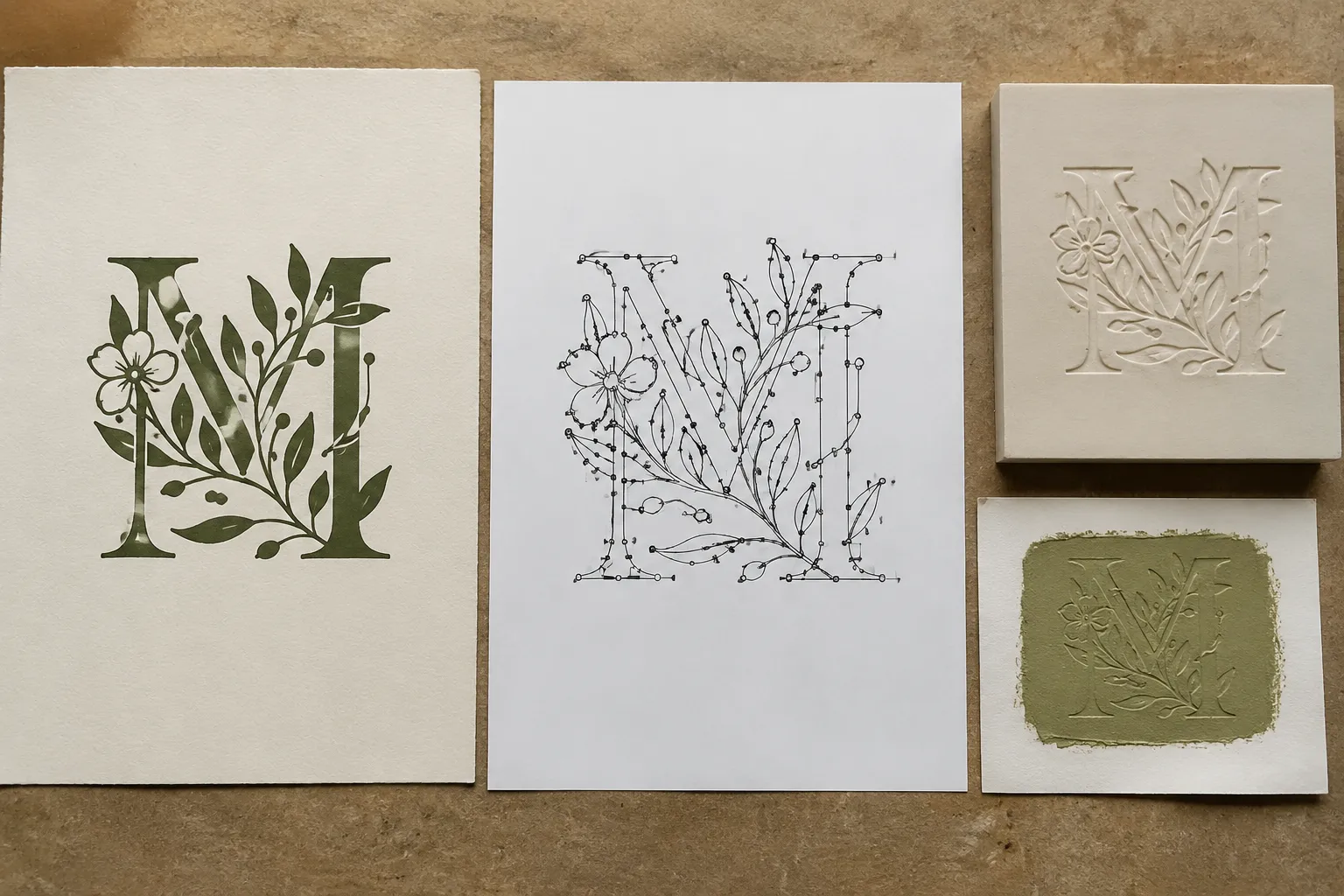
Concept approval asks: Is this the intended visual direction?
Production review asks: Has that direction been prepared and examined for a specific size, material, process, and equipment context?
A material-context mockup helps the customer judge placement and proportion. It remains a representation rather than a produced result.
A path view indicates file structure. It may expose open paths, overlaps, duplicate contours, and layer separation. It does not establish how a selected material and machine setup will behave.
A test-piece record documents one stated test context. It should identify the material, equipment context, file revision, dimensions, and relevant shop-recorded conditions. Its result cannot be generalized across other machines, materials, sizes, or shops.
Compare concepts by downstream tradeoffs
A useful comparison does not need a context-free winner. It should show which visible choice creates which later dependency.
Hypothetical example: detailed crest and simplified badge
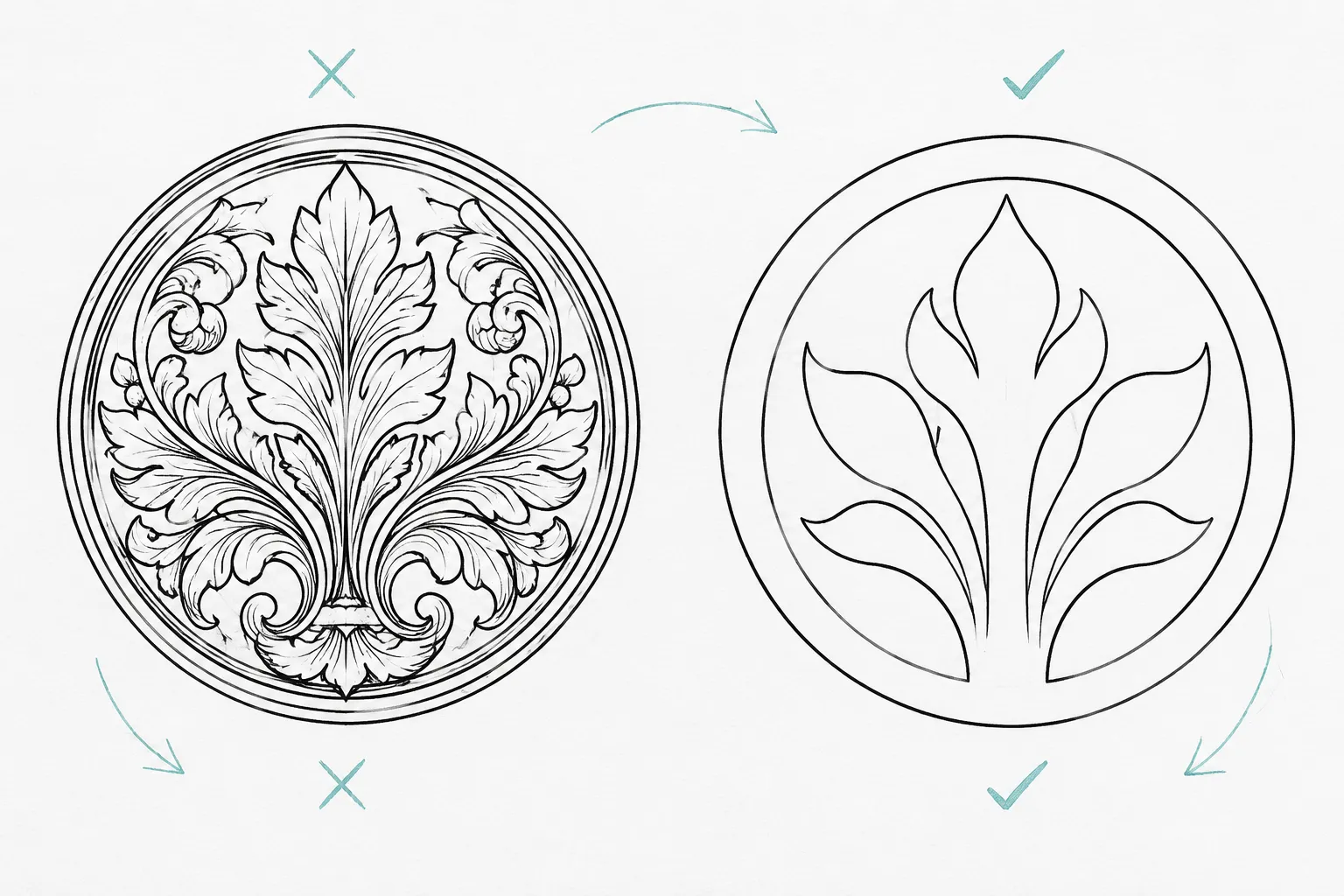
Concept A: Detailed crest. The preview shows narrow interior contours, overlapping leaves, and several small counters. The added detail may better match the customer’s preferred ornamental character, while requiring closer review at the confirmed output size.
Concept B: Simplified badge. The preview shows fewer overlaps, larger counters, and a wider border gap. Fewer small elements may need later revision, but the change also produces a more restrained visual character.
| Criterion | Concept A | Concept B |
|---|---|---|
| Visual character | Ornamental and layered | Clear and restrained |
| Small interior detail | More | Less |
| Open negative space | Narrower | Wider |
| Next decision | Review detail at confirmed size | Confirm the simplified character |
A bounded outcome might read: “Concept A selected for its ornamental detail. Treatment of narrow counters remains open pending confirmed dimensions and path review.”
Cleanup authority ends where visible appearance changes
Path cleanup often requires judgment. Some changes preserve the approved appearance; others revise it.
Removing duplicate paths, joining intended contours, or correcting accidental intersections may be routine preparation. The work should still remain tied to the approved revision.
Return a change for customer review when it alters a visible accepted feature, including:
- Removing a decorative element
- Widening a gap enough to change the composition
- Closing an intentionally open contour
- Changing letterforms
- Merging visibly separate layers
- Altering the border shape
- Rebalancing the subject within its frame
- Simplifying detail beyond the selected direction
The threshold is visible consequence. Reopen only the affected feature when possible, then pair the revised preview or path view with a plain-language change note.
Use closable conditions instead of vague outcomes
“Approved with changes” can hide both the required action and its owner. State whether the visual direction is accepted, deferred, or returned for revision.
- Approved: The displayed concept may proceed within the recorded boundary.
- Approved with stated conditions: The direction is accepted, but named items remain open.
- Revision requested: The current concept is not accepted as shown.
- Decision deferred: The approver needs a comparison, dimension, source note, or other input.
- Alternate approver required: The reviewer cannot decide the item within their role.
Conditions should be observable and closable. “Make it work better” supplies no acceptance threshold. “Increase separation between the initials and border, then return an updated preview” gives the next owner a defined action.
Decision ownership changes across the workflow
One person may perform several roles, especially in a small operation. The record should still distinguish which decision that person is making at each stage.
| Decision | Likely owner | What closes it |
|---|---|---|
| Preferred composition | Customer or named concept approver | Recorded concept selection |
| Spelling and visible text | Customer | Written confirmation |
| Final product dimensions | Customer or order owner | Confirmed measurement |
| Visual simplification | Customer when appearance changes | Revised preview approval |
| Path cleanup | Artwork preparer | Updated file and path record |
| Process-specific review | Shop operator | Shop handoff record |
| Test-piece appearance | Named sample approver | Acceptance or revision decision |
| Source permission | Relevant rights holder or documented source terms | Applicable rights documentation |
The approver’s identity does not establish that they hold every authority connected with the artwork. Keep the customer’s visual choice separate from source documentation and later shop decisions.
Revisions should preserve the original boundary
An approved concept can change later. The revision record should show whether the request affects an accepted feature, an open item, or something previously outside the review.
Record the previous revision, requested change, reason, affected features, newly opened questions, revision owner, and renewed approver. Then issue a distinct review object.
Suppose revision 02 contains an accepted monogram with an open lower border. Confirmed dimensions later prompt a wider gap. A useful entry would state: “Revision 03 widens the lower gap for review at the confirmed size. Customer review is reopened for the border treatment only; the initials and leaf arrangement remain accepted.”
This preserves decisions that have not changed and limits drift during a narrow correction.
Test-piece acceptance remains a separate decision
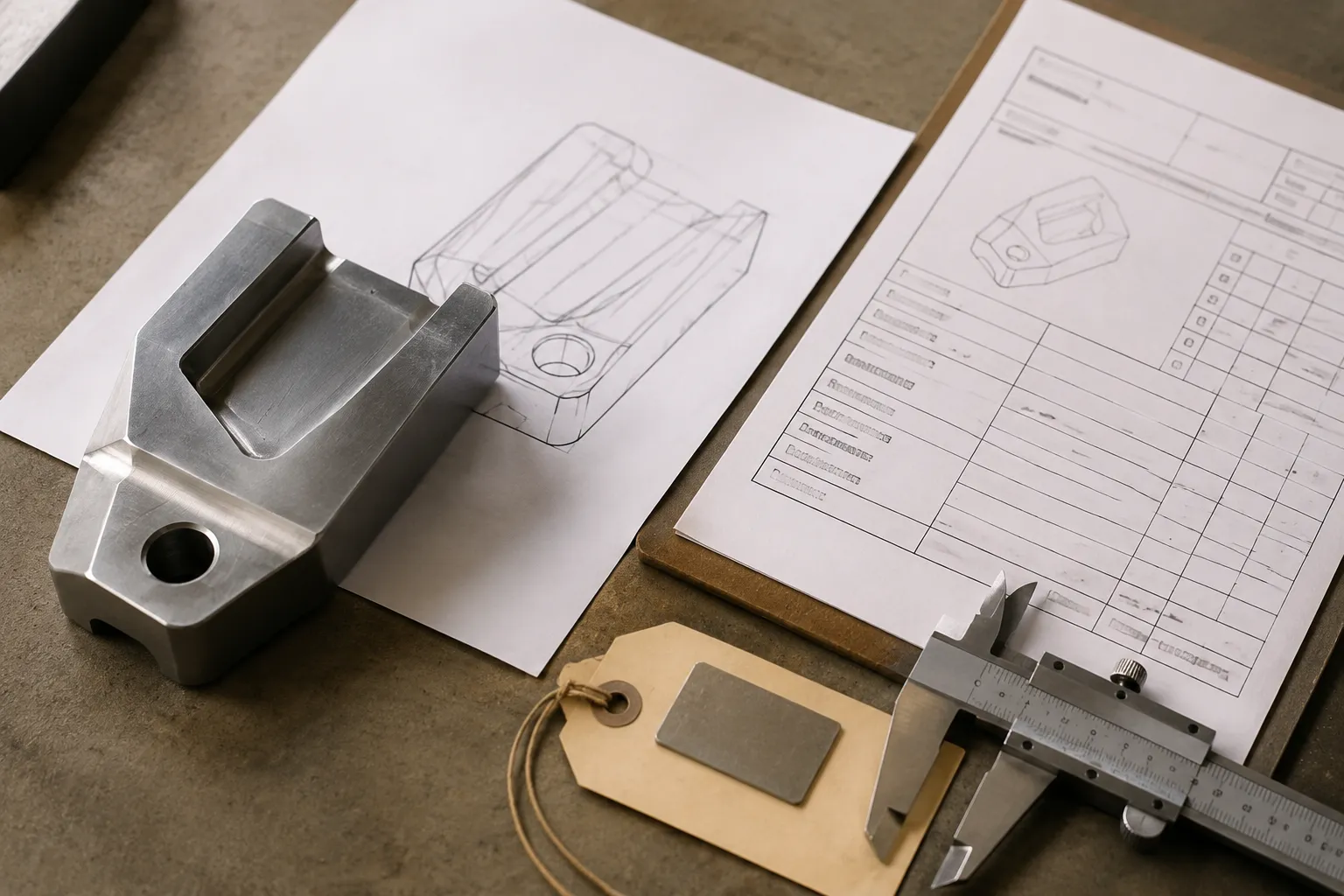
A customer may accept a concept and later reject a test piece without contradicting the earlier decision. The concept records intended appearance. The test-piece record captures the response to one produced sample in its stated context.
That record should identify the artwork revision, dimensions, exact material description available, equipment context, relevant shop-recorded conditions, visible result, requested corrections, approver, outcome, and date.
If the sample exposes a spacing preference, route it to the customer. A path defect returns to the artwork preparer. Equipment or setup adjustments remain with the shop operator.
Shop handoff review
Before routing the selected concept forward, confirm that the record answers these questions:
- Is the exact concept revision identifiable?
- Are the accepted visible choices named?
- Is the customer’s stated preference preserved?
- Are unresolved decisions listed separately?
- Does each open item have an owner and closing record?
- Are excluded decisions visible beside the outcome?
- Are mockups distinguished from path views and test-piece records?
- Is cleanup separated from the customer’s visual choice?
- Is there a route for changes to accepted features?
- Are rights, material, ventilation, and equipment questions routed to the relevant source or operator?
The handoff can proceed when the next participant knows what is fixed, what may change, and which decisions remain theirs. Every later production question does not need to close during concept review.
Common approval-record misreads
The outcome names a concept but not its revision
Similar previews become difficult to distinguish. Record the exact review object and revision.
A mockup is treated as output evidence
The mockup shows intended placement and appearance. Material response and produced appearance remain open until the relevant review occurs.
Every unresolved item is assigned to the shop
Dimensions, spelling, visible simplification, and acceptance of changed appearance may remain customer decisions. Assign ownership by the nature of the question.
Cleanup changes the selected design
A technical edit can have a visible consequence. Reopen the affected feature rather than treating the change as file maintenance.
Source permission is folded into visual approval
Accepting an image’s appearance does not establish permission to use it. Maintain a separate source and rights record.
The outcome says “final” while dependencies remain open
State what is settled at the concept level and name the decisions still awaiting dimensions, documentation, cleanup, or testing.
Evidence boundary
Research on approval processes supports separating requesters, approvers, review steps, outcomes, correction routes, and unresolved exceptions. Design-rationale research also supports connecting visible features with requirements, preferences, and review evidence.
Public research directly addressing customer-facing line art approval in small-shop handoffs remains limited. The approved, open, and out-of-scope structure used here is an editorial framework, not a universal shop standard.
Carry forward the exact revision, the accepted visible choices, and every unresolved owner. Move into cleanup only when a later reviewer can identify what may change and what must return for renewed customer approval.
Sources
- Further Design Patterns for Approval Processes
- Feature, specification and evidence framework for communicating design rationale | Design Science | Cambridge Core
- Enhancing the design dialogue: an architecture to document engineering design activities
- Approval Processes of Design : in Manufacturing Industry